


Fr. TI’s Bio Rev. Fr. Dr. Theophilus Itaman (Fr. TI) is a Catholic Priest of…
WRITTEN BY
REV. FR. THEOPHILUS ITAMAN, PhD
Introduction
The history of Esanland would not be complete without acknowledging the significant role of the Catholic Church in its education and development. Since the 1900s, Catholic missionaries have established not only churches but also schools, laying the groundwork for formal education and societal progress. Following the mandate of the Church in Gravissimum Educationis, missionaries ensured that these schools went beyond teaching academic subjects and became hubs for instilling values, developing leaders, and promoting community service and transformation. This assertion aligns with UNESCO’s view that “Education is a human right with immense power to transform. On its foundation rest the cornerstones of freedom, democracy, and sustainable human development.”.
As we look back on the past and look forward to the future, it is crucial to assess the prospects and potential of Catholic education in Esanland – not only to commemorate its successes but also to find ways to rejuvenate its mission for the betterment of future generations.
Geographical Location
The Diocese of Uromi encompasses the entire Esanland, comprising five local government areas and 35 towns: It is made up of Esan North East, Esan South East, Esan Central, Esan West, and Igueben Local Government Areas. The Diocese encompasses the following towns: Ekpoma, Irrua, Ewu, Uromi, Ubiaja, Udo, Oria, Ugboha, Illushi, Ifeku, Onogholo, Iruepken, Uzea, Ewatto, Okhuesan, Emu, Orowa, Uroh, Ohordua, Ewohimi, Igueben, Opoji, Ugbegun, Egoro, Urohi, Ukhun, Idoa, Ebelle, Okalo, Ogwa, Ujiogba, Ugun, Amahor, Ewossa, and Ekpon (Okojie, 1994).
The Esan people reside in Edo State, Nigeria, which covers an area of approximately 210km2 (540 square miles). Esan is located 80 kilometres north of the capital city, Benin City, and falls within the Central Senatorial District of Edo State (Enato et al., 2024). Geographically, Esan is situated in the tropical zone in the northern part of the Nigerian forest region. It shares borders with Owan to the northwest, Etsako to the northeast, Orhiomwon and Ika to the south, and Aniocha and Oshimili to the southeast. According to the 2006 census, Esanland had a population of 591,334, with females accounting for 291,839 of that number (Population Census of Nigeria, 2006; Enato et al., 2024).
The Coming of the Missionaries
The early 20th century saw the advent of Catholicism in Esanland as a result of the efforts of European explorers and missionaries (Okojie, 1994). The first French missionaries, Frs. Clement Barnwarth and Joseph Corbeau, came to Ubiaja and later Ukoni-Uromi to spread the Catholic faith, marking the beginning of missionary work in Esanland. The S.M.A. Fathers from Ireland took over after the departure of Barnwarth and Corbeau and utilised the “school system” as a method of evangelisation and conversion. Along with teaching basic literacy skills, religious instruction was also incorporated into the curriculum. Bishop Patrick Joseph Kelly made sure that school teachers were trained as both catechists and interpreters. He also established a school for catechists and “brother” training to serve as intermediaries between the missionaries and local
people, planting the seeds of priestly vocation in many hearts (Enato et al., 2024). Additionally, the missionaries were actively involved in pastoral activities both within and outside the schools. Chapels were built within boarding schools for students’ spiritual well-being, while Mass centres were established in surrounding neighbourhoods.
The advent of Catholic missionaries in Esanland not only brought religious teachings but also introduced structured Western education. As mission schools were established, often located near churches and missionary residences, this marked the start of organised education in the area (Okojie, 1994).
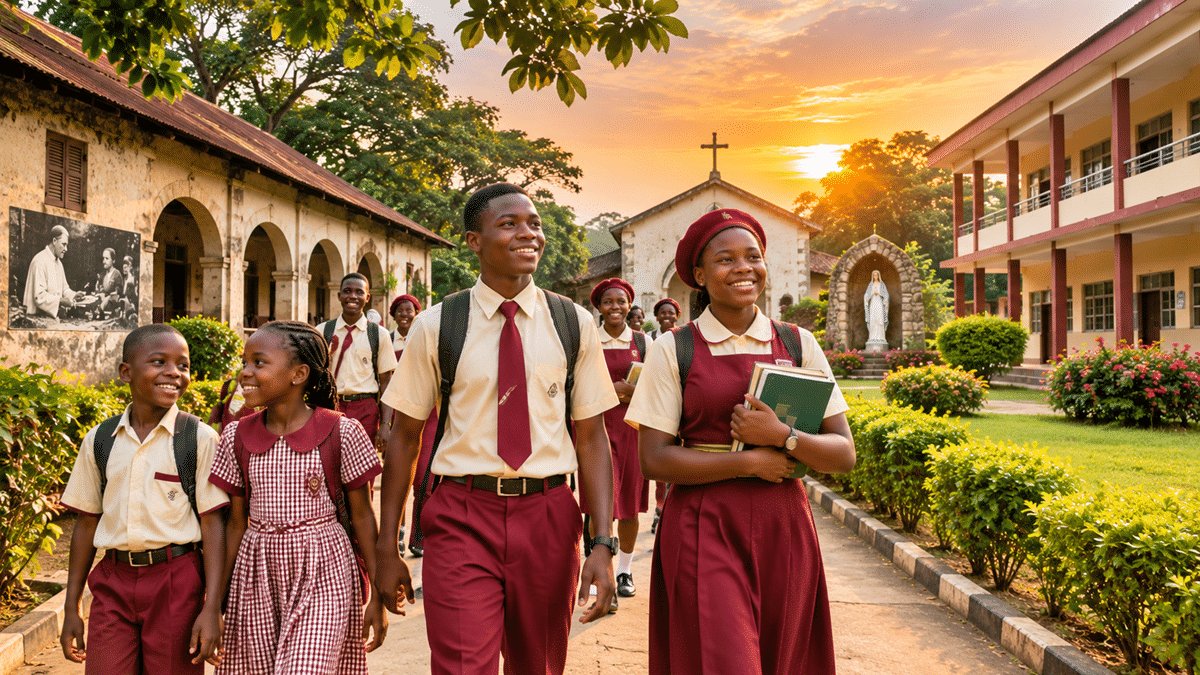
These educational institutions established a structured approach to learning, combining religious principles with academic teachings. They not only encouraged literacy but also prioritised discipline, moral development, and community service. This assertion agrees with the research findings by Bature (2016) that empirical analyses of Catholic schooling in Nigeria identify correlations between faith-based schooling and civic dispositions such as discipline, volunteerism, and communal cohesion. Presently, the Catholic Church in Esanland remains a significant contributor in the field of education, operating numerous elementary and high schools and playing a role in overseeing higher education institutions in the state (Bature, 2016). The schools in Esanland played a significant role in shaping the early elites, such as chiefs, teachers, catechists, government officials, and the communities in general. This assertion dovetails with the view of Nelson Mandela that “Education is the most powerful weapon which you can use to change the world.” According to our elders, “The Catholic school was not just a place of learning; it was a place where boys became men, and girls became ladies of honour.” Schools were instruments of transformation. These were some of the schools established by the early missionaries.
PROMINENT EARLY CATHOLIC SCHOOLS.
Some of the Secondary Schools
- John Bosco College, Ubiaja.
- Sacred Heart Girls College, Ubiaja.
- Our Lady of Lourdes Girls’ Grammar School, Idigun-Uromi.
- Annunciation Catholic College, Irrua.
- Dominic’s Secondary School, Iruekpen (now Iruepken Mixed Secondary School, Iruekpen.
- Benedict Boys’ High School, Igueben (Now Eguare Secondary School)
Some of the Primary Schools
- Benedict Primary School, Ubiaja (now Orhuen Primary School)
- Anthony Primary School, Uromi. (Now OPoji Primary School)
- Francis Catholic Primary School, Ohordua (Now Eguare Primary School).
- Gregory Primary School, Ekpoma (Now Ikokogbe Primary School)
- Peter Catholic Primary School, Ohordua (Now Odua Primary School)
- Christopher Catholic School (now Uhomhebho Primary School, Ewatto).
- Dennis Primary School, Ugboha (Now Emaudo Primary School, Ugboh)
- Michael Catholic School (Now Usugbenu Primary School)
However, this form of evangelisation was disrupted in 1973 when all private schools were taken over by the military government. Nevertheless, recognising education as a means of evangelisation and personal development, the Catholic Church continued to build new schools because it sees education as life. As John Dewey would say, “Education is not preparation for life; education is life itself.” Our faith-based education is not solely focused on teaching about God but also encompasses forming individuals to fulfil their eternal destiny while contributing to the common good of society.
Currently, there are two groups of Catholic schools in the diocese: diocesan schools and schools owned by religious congregations. A diocesan school is a type of Catholic school owned, funded, and governed directly by the local diocese (or archdiocese) and, ultimately, by the Bishop, making it a direct extension of the Church’s centralised administrative structure. In contrast, schools owned by religious groups, such as those operated by a religious order (like the Sacred Heart Sisters), maintain a separate line of authority that flows to the superior, not the local Bishop. Thanks to the efforts of Archbishop Patrick Ekpu, and the subsequent contributions of Archbishop Augustine Akubeze and Bishop Donatus Ogun following the creation and erection of Uromi Diocese on February 25th, 2006, many new schools have been established in Esanland. In all, we have 24 primary and secondary schools in Esanland:
- Lumen Christi International High School, Uromi
- St. Andrew College, Emu
- Stella Maris Girls College, Iruekpen
- Mount Carmel Group of Schools, Ekpoma
- St. Matthias Group of Schools, Eguare-Ewohimi
- Sacred Heart High School, Egbelle-Uromi
- Holy Innocents Nursery/Primary/Secondary, Ugboha
- Irena Nursery/Primary/Secondary, Ewatto
- St. Andrew Catholic College. Emu
- St. Joseph Secondary School, Igueben
- St. Theresa of Avila College, Uhiele
Primary Schools
- St. Anselm Catholic Nursery, Irrua
- Ogbidi Nursery & Primary, Uromi
- Fr. Corbeaux Nursery and Primary School, Ukoni
- Stella Maris Nursery & Primary, Iruekpen
- St. Patrick Nursery & Primary, Ebudin
- St. Joseph Nursery & Primary, Ogwa
- St Jude Nursery and Primary, Ewu
- Nativity of Mary Nursery and Primary, Uhiele
- St. Joseph Nursery and Primary School, Ujuogba
- St. Gabriel Special Education Centre, Ugbegun
- St. Benedict Nursery and Primary, Ubiaja
- Christ the King (C.K.C.) Nursery and Primary, Ebele
- St. Augustine Nursery and Primary School, Illushi
Higher Education School:
- Institute of Leadership and Management, Egbele, Uromi
- St. Camillus College of Nursing Sciences, Uromi.
Art School:
- Sacred Art School, Uromi
BENEFITS OF CATHOLIC EDUCATION TO ESANLAND
Catholic education is unique and different from education in public and private schools around the world because of its fundamental characteristics and the spirit underlying it. The five fundamental characteristics of a Catholic school are that it is guided by a divine vision, founded on a Christian understanding of humanity, infused with a Catholic perspective, supported by the testimony of the Gospel, and driven by unity and community. These qualities distinguish Catholic schools as institutions committed to nurturing the holistic growth of students through a strong foundation in Christian values and the doctrines of the Church (Rodney & Farai, 2025).
Holistic education: Catholic education differs from other forms of learning. It aims to educate the individual holistically, while acknowledging the importance of physical, mental, social, and spiritual growth (Pope John Paul II in Ex corde Ecclesiae). The goal of Catholic schools is to cultivate all aspects of a person’s being. At Catholic schools, education goes beyond fulfilling a legal obligation or preventing truancy; it is an opportunity to embrace learning, develop talents, form lasting bonds, and practise the faith daily. The teaching method is comprehensive, promoting the development of all the essential elements of children’s well-being and happiness. Catholic schools recognise that children are our future and have the potential to impact the world positively. They hold their students in high regard and value children worldwide, recognising their power to shape history (Rodney & Farai, 2025).
Quality education: Catholic schools take pride in providing a top-quality academic education to students whose parents prioritise excellence in education. A Catholic education is characterised by its strong focus on academic excellence. Catholic schools consistently outperform public schools in state and national academic benchmarks, promoting critical thinking, practical application, and creative problem-solving skills (Okochi, 2009). An example of such a school is Lumen Christi International High School, located in Uromi, Edo State. As a Catholic school, Lumen Christi has dominated secondary education in Nigeria for three decades, maintaining its status as one of the best schools, with the best WAEC results for many years. Its documented achievements in science and examinations demonstrate a strong academic standard and an ability to prepare students for higher education and professional paths.
These outcomes bring regional benefits, such as increased skills, leadership, financial contributions, and community involvement. They are also a testament to the Catholic Church’s strong commitment to quality education. This commitment to academic excellence is reflected in the fact that 99% of students who attend Catholic high schools graduate, with 86% going on to attend a four-year university.
Technology and Art Curriculum: Catholic schools also recognise the importance of keeping up with societal changes, particularly in technology, and actively incorporate digital learning into their curricula. This not only teaches students how to use technology effectively but also instils a sense of responsibility for its positive and respectful use. Enrichment activities such as visual art, music and dance are integral parts of the Catholic school curriculum, as they allow for creative expression and experimentation in a healthy, empowering environment. Art has the power to bring people together through shared emotions and cultural appreciation, which explains the place of Sacred (Catholic) Art School in the Diocese of Uromi.
Extracurricular: Additionally, Catholic schools understand the value of recreational and competitive athletics for spiritual and physical enrichment. Sports programs promote a healthier lifestyle through physical fitness while fostering teamwork, camaraderie, hard work, and healthy competition in a positive setting. Hence, we hold competitions among Catholic schools in the Uromi Diocese, such as the Bishop’s Cup Football Competition. Most importantly, these activities teach children valuable lessons in character development by exposing them to situations where success is not guaranteed, and they must learn how to cope with disappointment and use it as motivation for personal growth (NSBECS, 2023).
Spiritual values: In a Catholic educational setting, the focus is not solely on academic knowledge. The ultimate aim of a Catholic education is to prepare students to live worthy lives, guided by the fear of God and a commitment to the salvation of souls. What sets Catholic schools apart is their focus on nurturing compassionate and productive individuals who are invested in their communities. Research shows that this emphasis on faith formation and service leads to students who are more civic-minded, open to diverse perspectives, dedicated to service as adults, and less prone to incarceration than their peers in public schools (Campbell, 2001). In Catholic schools, children are encouraged not only to excel academically but also to become devoted followers of Jesus Christ. However, this does not mean academics are disregarded; rather, they are seen as a way to cultivate our God-given intellectual abilities and enhance our spiritual growth (NSBECS, 2023).
The development of human capital and ethics: Numerous leaders in Esanland’s religious, traditional, business, and political sectors credit Catholic schools for their education or trace their education back to them. Catholic education in Esanland has nurtured vocations to the priesthood and religious life. These vocations have produced great men of God, such as Fr. Anslem Ojefua, Msgr. Stephen Ogbeide, Archbishop Patrick Ekpu, Cardinal Anthony Okojie, Bishop Donatus Ogun, and hundreds of Esan priests today. The same is true of prominent Esan sons and daughters nurtured by Catholic schools. You can hear our fathers and leaders say, “I am a product of a Catholic school.” In terms of morals, Catholic schools in Esanland are renowned for instilling discipline, shaping character, and promoting social accountability. Hence, St. Thomas Aquinas would say, “The things that we love tell us what we are.” This implies that the Catholic education the Church offers shows how values-based education shapes communities.
Developing Leaders for the World: The recently established Institute of Leadership and Management, Egbele, Uromi, in our diocese, is a significant move towards empowering young individuals with the abilities and knowledge necessary to lead and manage effectively while being guided by Catholic values. The establishment of the Institute of Leadership and Management will address the leadership gap in Nigeria.
The Institute of Leadership and Management (ILM) is owned by the Catholic Diocese of Uromi and is located in Uromi, Esan North-East L.G.A., Edo State. It is the first Catholic online institution in Nigeria. The Institute focuses on undergraduate and postgraduate programs that promote professionalism in leadership and management. It is designed to provide an excellent education for future leaders by focusing on developing their leadership and management skills. The Institute offers staff in educational institutions, future leaders, and others in leadership positions—such as educators, school administrators, and leaders and managers in various organisations—a golden opportunity to acquire high-quality leadership and management skills through online and classroom-based training. Training takes place online and in the classroom at various levels and in different formats, leading to certificates, bachelor’s degrees, postgraduate diplomas (PGDs), master’s degrees, and PhDs.
PROSPECTS AND POSSIBILITIES FOR CATHOLIC EDUCATION IN ESANLAND
The future of Catholic education in Esanland shows great potential for growth and advancement. Although it has made a significant impact, there are still numerous opportunities for expansion, innovation, and consolidation. These prospects include:
- Restoration and upgrading of mission schools: There is a growing movement to reclaim the mission schools that were taken over by the government in the 1970s. By restoring and rehabilitating these schools, the Church can revive its original high standards of education and mission. We look forward to the Edo State Government returning these schools to their original owners for greater effectiveness.
- Establishment of more Catholic secondary and tertiary institutions: With increasing demand for faith-based education grounded in strong values, there is an opportunity to establish more secondary schools, technical colleges, and even a Catholic university in Esanland. Today, we eagerly await the establishment of Jesuit University, Ewatto, which is currently under construction.
- Teacher development and the establishment of teachers’ training colleges. Investing in continuous training and preparing quality teachers for Catholic schools will ensure a consistent standard of educational excellence.
- Creating specialised educational establishments: Educational institutions focused on health sciences, vocational training, agriculture, and the arts can cater to the unique socio-economic requirements of Esanland, as demonstrated by St. Camillus College of Nursing Sciences in Uromi.
- Advocating for indigenous language and cultural studies: By incorporating the Esan language and history into their curricula, schools can play a crucial role in preserving cultural heritage. Implementing community-based literacy and adult education initiatives beyond traditional schools will provide educational opportunities for adults and those who have dropped out of school.
In conclusion, the Catholic Church has played a significant role in shaping the educational, moral, and social aspects of Esanland for many years. Its mission schools have produced leaders, priests, catechists, and responsible citizens who have contributed greatly to their communities. The Catholic Church’s dedication to education in Esanland presents abundant opportunities for progress, ingenuity, and positive influence. To continue this legacy, the Church must embrace new opportunities by restoring and modernising its schools, increasing access, and strengthening moral teachings. As Saint John Paul II reminds us, “The future of humanity passes by way of the family — and the school is the family of society.” Put differently, the future of the world and of the Church passes through the school. This suggests that education is crucial in shaping the future of
humanity. Let us, therefore, recommit to building educational institutions worthy of the Esan heritage and the Catholic faith.
References
Rodney, M. & Farai, M. (2025). Rising School Fees Torment Many Africans. Associated Press.
Bature, A. (2016). Catholic Schools as Means of Promoting Peace and Development in Nigeria.
Enato, L. S. E., Abenabe, G. K., & Ekpotuatin, C. A. (2024). Impact of Colonialism and Western Education on Esan Trade and Markets in Journal of Humanities and Social Policy. Vol 11 (6), 2545-5729. www.iiardjournals.org. DOI:10.56201/jhsp.v10.no6.2024.pg77.97
Enato, L. S. E., Abenabe, G. K. & Ekpotuatin, C. A. (2024). Impact of Colonialism and Western Education on Esan Art and Craft Industry in the Journal of Humanities and Social Policy. 10(6), 2545-5729.
John Paul II. (1990). Ex corde Ecclesiae: Apostolic Constitution on Catholic Universities. Vatican
NSBECS (2023). National Standards and Benchmarks for Effective Catholic Elementary and Secondary Schools, 2nd edition. Arlington, VA; National Catholic Educational.
Okojie, C. G. (1994). Esan Native Laws and Customs with Ethnographic Studies of the Esan People. Lagos, Illupeju Press Ltd.
Okochi, A. A. (2009). The Clergy and Catholic Educational Leadership in Nigeria (Doctoral Dissertation).
Paul VI. (1965). Gravissimum Educationis: Declaration on Christian Education. Vatican.
The 2006 Population Census of the Federal Republic of Nigeria


